Didier Stevens

Saturday 20 December 2025

Using a USB-C Trigger Cable To Power An FM Radio

Filed under: Hardware — Didier Stevens @ 0:00

The Dutch government is telling people to prepare to be self-sufficient for at least 72 hours in case of a major emergency when many services (electricity, water, internet) could be unavailable. This campaign is called “Denk Vooruit” (Think Ahead). An emergency booklet has been mailed to all inhabitants. The Belgian authorities are voicing similar concerns, but no emergency booklet has been mailed.

The booklet advises people to have a radio in their emergency kit, specifically one that works without mains power, like a battery-powered or hand-crank radio.

I have a battery-powered FM radio, and I wanted to know if I could power it with a USB powerbank and a USB trigger board (I have several high-capacity powerbanks).

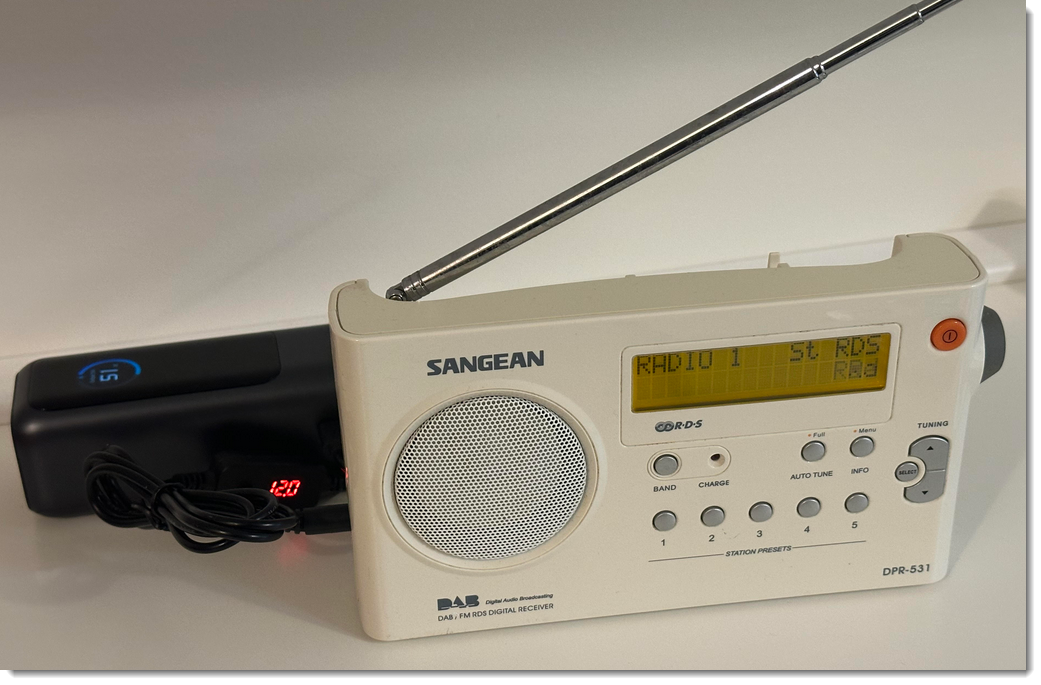
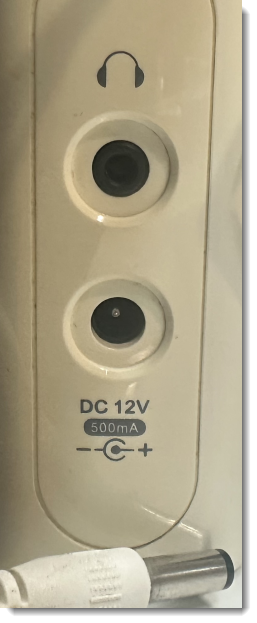
It works: the radio has a 12V barrel jack connector, and I can power it with this USB trigger board/cable, without soldering connectors:

I’ll probably still solder a cable with a fixed 12V USB trigger board, because this setup is prone to accidentally pushing the button of the USB trigger board, and delivering 15V or 20V to the radio (a voltage that is too high, and might destroy the radio).

Although this setup is portable, it’s not very handy to carry around when you go away from home. So I looked around on Aliexpress for a small & cheap FM radio and selected a Junus J-555. It can be powered by two alkaline AAA batteries or by its built-in Li-Po battery. That Li-Po battery can be charged via a USB-C connector, and the radio also works while charging. But what is most important: it has a good reception of FM and AM stations when operating inside my home.

Thursday 18 December 2025

USB Trigger Boards

Filed under: Hardware — Didier Stevens @ 0:00

In blog post “Quickpost: USB Electric Razor” I mention USB trigger boards.

A USB trigger board is a small electronic device that receives power via a USB-C connector, and delivers power with a voltage that it negotiates with the USB power source.

This one for example is set to deliver 12V:

Left you have the USB-C connector, right you have positive and ground soldering pads with 12V between them.

Here is one that can be configured with DIP-switches (5V, 9V, 12V, …):

The USB-C connector is on the left, and you have screw connectors on the right for the output.

Here is one with cables, and a display and switch that lets you cycle between 5V, 9V, 12V, 15V and 20V.

The USB-C cable is on the right, and a cable with a barrel jack connector is on the left, delivering 12V in this example.

And here is one that is even more configurable:

A USB-C connector on the left, and a USB-A connector on the right with a USB-A cable with barrel jack connector. It’s configured for 5V.

This one can not only negotiate fixed voltages (5V, 9V, 12V, …), but also arbitrary voltages via Programmable Power Supply, provided your USB power source supports PPS. For example, one can request 5.5V, and also limit the current, to say 0.1A.

And finally, I also have this Fnirsi DPS-150, a portable power supply that can also be powered via a USB-C connector:

It’s not a USB trigger board, but more like a lab power supply. It is limited by the power it receives from the USB power supply. For example, on the picture above, you can see that it negotiated 20V (20.07V) with the USB power source, it is set to deliver 20V (Vset), and delivers 19.83V (unloaded). The dial button can be used to set a voltage between 0V and 19.83 (in this example). The maximum current can also be set (Iset).

These boards allow me to power devices with various power requirements, and be mobile.

Saturday 6 December 2025

Quickpost: USB-C Rechargeable Batteries

Filed under: Hardware,Quickpost — Didier Stevens @ 10:52

I discovered USB-C rechargeable batteries, and bought a set of AA and AAA batteries.

They have a USB-C connector for recharging, so you don’t need a separate charger like you do for NiMH batteries.

This post is not a full blog post, but more a collection of lab notes.

These USB-C batteries deliver 1,5 Volt (unlike NiMH batteries that deliver 1,3 Volt). And during discharge tests, I noticed that the voltage almost doesn’t change. So not only must they have battery charger electronics inside, but also converter electronics that deliver a constant voltage. Probably something like a switching-mode power supply circuit, because when I look at the ripple of the voltage with an oscilloscope, I see a pattern that makes me think of a switching-mode power supply:

That’s for a AA battery that delivers power to an electronic load that draws 0,100 A current:

The ripple could also come from the electronic load itself, or some electronic noise source in my lab. So to rule that out, I discharged an alkaline battery and got this:

This is a different pattern and it repeats with a different frequency, to the ripple we saw in the first scope picture must come from the battery.

I also did measurements with a spectrum analyzer:

Here you can see a peak (and its harmonics) around 1,20 MHz.

That too comes from the battery, as these peaks do not appear with an alkaline battery:

In the picture of the electronic load screen, one can see 1493 mWh: that’s for the discharge of an AA battery at 0,100 A until the voltage reaches 0,5 V. 1493 is far less than the 3400 mWh printed in a large font on each battery.

I did a series of tests with my AA (0,100 A discharge current) and AAA (0,025 A discharge current) batteries, and on average I get:

TypeMeasured output (mWh)Advertized outputMeasured input (mWh)RTE
AA15273400211472%
AAA478120075463%

Unfortunately, these batteries deliver far less electrical energy than advertized.

For comparison, I also discharged an fresh alkaline AAA battery and got 1380 mWh out of it.

I created a discharge graph for a USB-C rechargeable AA battery:

During more than 9 hours, the voltage stays around 1,45 V (for a 0,100 A discharge current). Then it abruptly drops to 1,05 V, and then 0 V.

Charging the AA batteries requires 2114 mWh on average, the AAA batteries require 754 mWh. This is also far less than the advertized capacity. This allowed me to calculate the Round Trip Efficiency (RTE) in the table above.

Despite the discrepancy in capacity, these batteries have advantages too:

  • the nominal voltage is 1,5 Volt
  • the voltage curve remains (mostly) flat while discharging
  • their chemistry doesn’t result in battery leaks that corrode your electronics
  • you don’t need a battery charger

Disadvantages:

  • far less capacity than advertized
  • very abrupt voltage drop when fully discharged
  • they can’t negotiate power with a USB charger (you can’t charge them with a USB-C to USB-C cable, you must use a USB-A to USB-C cable like the one included)
  • some electronic noise because of the switching power supply

Quickpost info

Friday 5 December 2025

Quickpost: USB Electric Razor

Filed under: Hardware,Quickpost — Didier Stevens @ 20:26

The USB Power Delivery protocol (USB PD) defines power negotiation.

For example, USB trigger boards negotiate power requirements with a USB power source (like a charger or a powerbank), and can ask for a higher voltage than the standard 5V of a USB source that does not support USB PD.

This also explains why there are (cheap) devices with a USB-C port, that can only be powered with a USB-A to USB-C cable, and not with a USB-C to USB-C cable. These devices are not capable to negotiate their power requirements, they expect 5.0 Volts on the VBUS pins. These devices do not support USB PD.

USB PD made it possible to invent all kinds of gadgets, adapters, …

One adapter I want to talk about in this blog post, allows me to charge my Philips electric razor with a USB-C powerbank.

My Philips electric razor has its own proprietary charger and connector, operating at 15 Volts. When I travel, I need to remember to bring along the charger (it does not fit in the razor’s case).

But now I have this adapter:

On one end, it has a USB-C receptacle:

And on the other end, it has the Philips proprietary razor plug.

The adapter negotiates 15 volts with the USB power source:

I didn’t know such adapters existed, but while experimenting with USB PD, I realized that it makes such adapters possible, and so I started to search and found one on AliExpress.

This allows me to travel without an extra charger, just with a very small adapter (and a USB power source).


Quickpost info

Saturday 29 November 2025

Quickpost: CR1225 vs CR1220

Filed under: Hardware,Quickpost — Didier Stevens @ 0:00

I had to replace a button cell, a CR1225, but I only had a CR1220.

So I just used that CR1220 in stead. This works, because a CR1220 and CR1225 differ in mechanical properties (dimension), but not in electrical properties (voltage).

Both cells have a nominal voltage of 3 Volts.

CR1220 means the following:

  • C: Lithium battery
  • R: Round
  • 12: 12mm diameter
  • 20: 2,0mm thickness

The difference between a CR1220 and CR1225 is the thickness: a CR1220 is 0,5mm slimmer than a CR1225. So a CR1220 fits in a CR1225 holder without problem.


Quickpost info

Friday 21 November 2025

Quickpost: Power Requirements Of A Keylogger

Filed under: Hardware,Quickpost — Didier Stevens @ 0:00

I did some tests with a Keelog keylogger, the AirDrive Forensic Keylogger: I wanted to find out how much power that keylogger requires.

This is my test setup:

  1. This is the USB keyboard
  2. The USB cable of the keyboard is plugged into the USB breakout board
  3. This is the USB breakout board, allowing me to measure the voltage and current of the USB power lines
  4. This is specialized multimeter that can measure power (by measuring voltage and current simultaneously)
  5. The USB cable of the USB breakout board is plugged into a USB extension cable that is plugged into a computer

In this standby state, with all its LEDs turned of, the keyboard consumes 11 mW.

That’s not much power. Compare this with the Numlock LED turned on, and we have 4 times as much: 47 mW:

And here I have the keylogger plugged in (between the keyboard and the USB breakout board):

Now the total power measured is 383 mW: that’s for the keyboard (with LEDs turned off) and the keylogger.

That’s a huge difference with 11 mW for a keyboard without keylogger.

If this keylogger would be hidden into the keyboard, it would be easily detected using this measurement method, because this particular keyboard requires 30+ times less power than the keylogger itself.


Quickpost info

Sunday 6 July 2025

Quickpost: 12V Portable Power Station

Filed under: Hardware,Quickpost — Didier Stevens @ 9:18

In blog post “My Fridge & My Portable Power Station” I managed to get a maximum of 778 Wh out of my portable power station with a rated capacity of 1260 Wh.

Thinking that quite some power got lost in the AC inverter, I set out to measure the amount of power I can get with its 12V DC output.

I configured my electronic load to draw 5 A:

The portable power station displayed 65 W output:

And I only got 673 Wh out of it:

That’s even worse than for 230V with the inverter: 53% of the rated capacity.


Quickpost info

Wednesday 2 July 2025

Quickpost: Doorbell & Condensation

Filed under: Hardware,Quickpost — Didier Stevens @ 0:00

Remember that I broke the filament of the light-bulb in my doorbell?

Turns out there is another advantage to having a light-bulb in your doorbell: it prevents condensation:


Quickpost info

Tuesday 10 June 2025

My Fridge & My Portable Power Station

Filed under: Hardware — Didier Stevens @ 0:00

You probably heard about the blackout in Spain & Portugal that happened more than a month ago at the time I’m writing this, and is still under investigation to find out the root cause.

It inspired me to do the following test: how long will my fridge run when powered by my power station. I own a portable power station (Ecoflow Delta EU), its batteries have a total capacity of 1260 Wh.

My fridge consumes 1,72W in standby and about 27W when the motor is running. Here is a graph of the power it consumes while running over a period of 24 hours:

On average, it requires 529 Wh per day to run.

So I was thinking, theoretically, it should run a bit more than 2 days (1260 Wh / 529 Wh per day = 2,38 days) when powered by my power station.

In practice, it ran just shy of 24 hours before my power station was depleted:

It consumed 266 Wh. Which is far less then the capacity of the batteries in the power station (1260 Wh).

How can this be explained?

My first idea was maybe it’s because of the inductive load (it’s a motor). The power factor is very low (0.06):

I was thinking: maybe the 230V inverter in my power station is not efficient at handling inductive loads.

So I tried with a pure resistive load (an incandescent light bulb of 60W):

I got 595 Wh. Which is still far less than 1260 Wh.

Then I tried with a fan that requires 21W at a power factor of 0.70:

I got 362 Wh:

I started to reformulate my hypothesis: me it’s not the low power factor that make the inverter inefficient, but maybe it’s inefficient at low power demands.

Because while this fan requires 21W, the power station was displaying 31W :

So I did run the fan again, but now with the resistive heating element powered on, so that it would consume a large amount of power (around 1 kWh, that’s the maximum sustained load my power station can handle):

I got 778 Wh out of it:

So that’s the best my power station can deliver at a maximum sustained load of 1 kWh and a nearly pure resistive power factor of 0.99.

Which is only 62% of the rated battery capacity.

Conclusion: I can power my fridge for 1 day in case of a power outage, which should be ample enough in case of a power outage similar to the Spain & Portugal incident. But it’s far from efficient. Inverters seem to very less efficient at very low loads.

Sunday 8 June 2025

Quickpost: USB-C Couplers

Filed under: Hardware — Didier Stevens @ 0:00

I have this USB C coupler to connect 2 USB C cables. The coupler has 2 female connectors:

I use it to extend my cables when charging:

But it doesn’t always work. Sometimes it does, sometimes it doesn’t (e.g., the device is not charging).

So I assumed this coupler was defective, and got another one:

This one has a small LED, and it too wouldn’t always work.

But because of the LED, I quickly figured it out:

If the LED isn’t on (e.g., not current is flowing), I just have to flip one of the male connectors 180°. Then it works.

And that’s what I also have to do with the first coupler I got: if it doesn’t work, flip one of the connectors. I just needed a LED to figure this out 🙂


Quickpost info

Next Page »

Blog at WordPress.com.